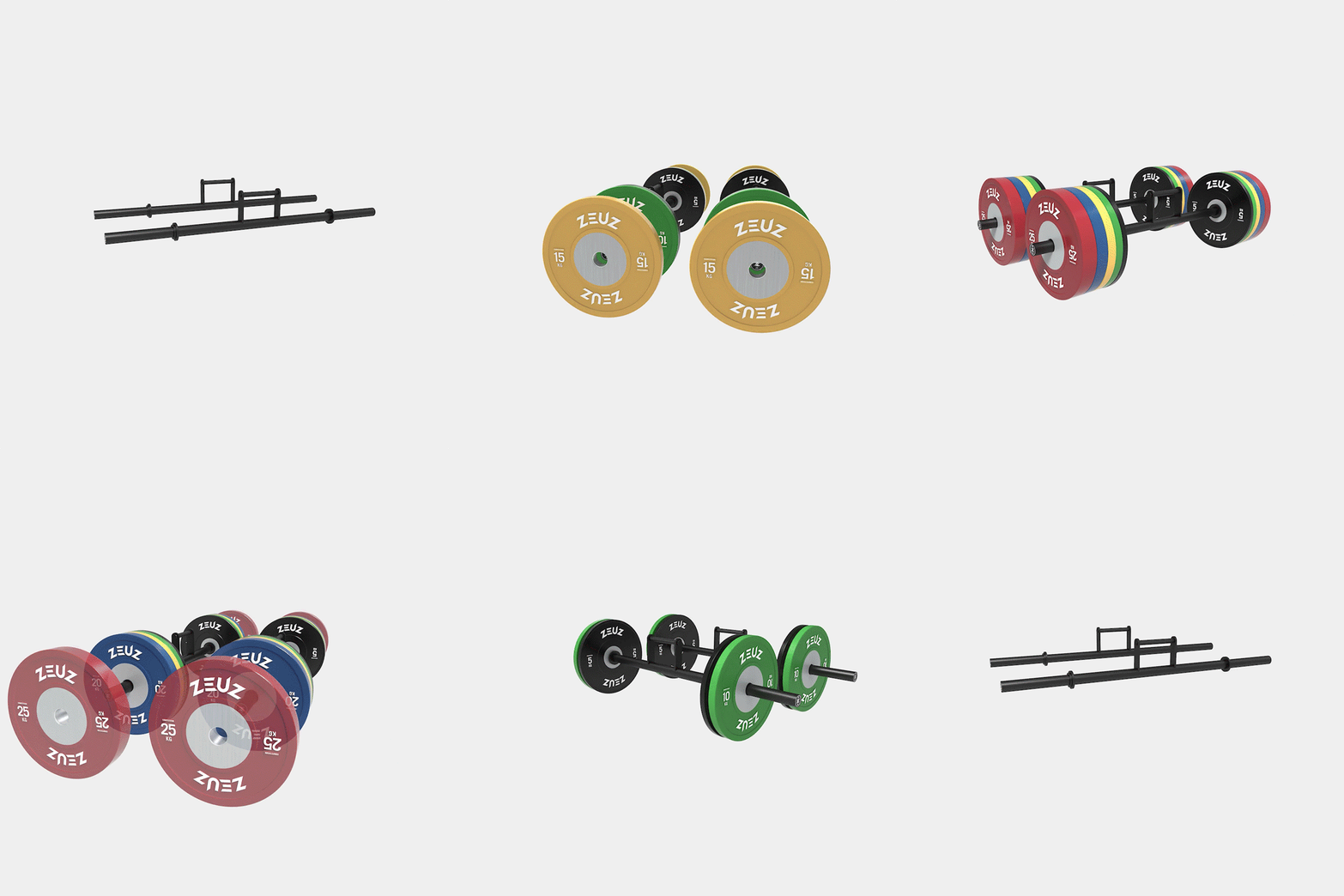
Barbells
A good barbell is the basis for effective STRENGTH TRAINING. From heavy deadlifts to snatches and cleans, a sturdy weightlifting barbell gives you control, stability, and the freedom to lift heavy weights. Pair it with a set of weight plates, and you've got everything you need to get serious about your workouts!
Filters
11 products
Why a barbell is so important
You can't make your full-body strength training more complete than with a barbell. Why? Because it allows you to train large muscle groups, improve your coordination, and make your strength progression measurable. A barbell is also:
- Multifunctional
- Suitable for full-body training
- Good for maximum strength building
- A long-term investment
Do you really want to train without limitations? Then combine your barbell with a sturdy set of weight plates and increase the weight step by step!
The best barbell exercises
A barbell opens the door to dozens of exercises that challenge your entire body. Here are a few absolute essentials:
✔ Squats
✔ Deadlifts
✔ Bench Press
✔ Overhead Press
✔ Barbell Rows
✔ Snatch & Clean and Jerk
Do you train with heavy weights? Then drop pads can help reduce impact and noise when dropping the bar!
Buying barbells: what should you pay attention to?
Not every barbell is the same. Do you want to buy a barbell that fits your training? Then pay attention to these points:
1. Length & type of barbell
- Olympic barbells (2.2 meters) - Perfect for weightlifting and powerlifting.
- Short barbells (1.2-1.8 meters) - Ideal for home use or limited space.
- EZ Curl Bars - Specially designed for bicep and tricep exercises.
- Hex Bars - Ideal for deadlifts and farmer’s walks with less strain on the lower back.
2. Knurling & grip
- The sharper the knurling, the more grip you have.
- Choose softer knurling if comfort is important to you.
- For deadlifts and powerlifting, more aggressive knurling is ideal.
3. Load capacity & whip
- Powerlifters need a stiff barbell without ‘whip’ (flexibility).
- Weightlifters prefer bars with some flex for better shock absorption during explosive lifts.
4. Bearings & rotation
- Weightlifting? Choose a barbell with smooth bearings for fluid rotation.
- For strength training, bushings are often sufficient and more durable.
How to use a barbell correctly?
Good technique prevents injuries and helps you get stronger faster. Here are a few tips to get the most out of your barbell:
- Place your hands at the correct width for the exercise you are doing.
- Experiment with a mixed grip or hook grip for heavy deadlifts.
- Tighten your core well before performing a heavy lift.
- Keep the bar close to your body.

Frequently Asked Questions about Barbell Bars
Which barbell do I need as a beginner?
As a beginner athlete, an Olympic barbell is an excellent choice. This bar is the standard in most gyms and provides a perfect foundation for compound lifts such as squats, deadlifts, bench presses, and overhead presses. They usually weigh 20 kg, are 220 cm long, and have a grip diameter of 28 mm, which ensures good handling. Moreover, you can easily progress with it, as you can gradually add weight with weight plates. There are also lighter variants (such as the 15 kg women's bar) available for those who want a smaller grip or less weight to start with.
How much weight can a barbell hold?
The load capacity depends on the type and quality of the bar. High-quality Olympic barbell bars can carry between 300 and 700+ kg. This makes them suitable for everything from regular strength training to powerlifting or CrossFit. Cheaper or standard fitness bars often have a lower load capacity and bend more quickly under pressure. At ZEUZ, the bars are extensively tested for bending, knurling (the grip texture), and rotation capacity, so you can train safely with heavy weights.
What is the difference between an Olympic barbell and a standard barbell?
The biggest difference lies in the construction and quality. An Olympic barbell is designed according to international standards and is made to withstand heavy and intensive use. The bar itself is heavier and longer, usually 20 kilograms and about 220 centimeters, and has a thicker grip of around 28 to 29 millimeters. Additionally, the ends of an Olympic bar rotate more smoothly thanks to built-in bearings or bushings, which is especially important for exercises where the bar needs to rotate quickly, such as in weightlifting. A standard barbell is often shorter, lighter, and lacks these technical features, making it less suitable for explosive or heavy lifts. For those who train seriously, an Olympic bar is therefore almost always the better option.
How do I maintain my barbell?
To extend the lifespan of your barbell, regular maintenance is important. After intensive use, magnesium residues, dirt, and sweat can remain on the steel, especially in the knurling of the grip. These residues can eventually cause rust and wear. Therefore, it is good to clean the bar occasionally with a dry or slightly damp cloth, and possibly use a soft brush to clean the knurling. It is also recommended to occasionally put a drop of oil on the bearings or bushings so that the ends of the bar continue to rotate smoothly. Always let the bar dry thoroughly before storing it, and preferably keep it in a dry place, horizontally in a rack or vertically in a holder. This way, your bar stays in top condition, even with regular and heavy use.
How much does an Olympic barbell weigh?
A standard men's Olympic barbell weighs 20 kg and is 220 cm long. The women's Olympic bar weighs 15 kg and is 200 cm long, with a slightly thinner grip. There are also lighter training bars weighing around 10 kg (170 cm), which are useful for technique training or as a barbell for home use. The exact weight is always listed with the product name, so you know exactly what you're buying.
What is the ideal length for an Olympic barbell?
The best length depends on your space and training. A 220 cm Olympic barbell is the competition standard for weightlifting and powerlifting and fits in a full rack. If you have less space or train at home, a 200 cm bar or a shorter 170 cm version may be more suitable. Measure your rack and training area before choosing a barbell to ensure the bar fits comfortably with plates.
Why buy barbell bars at ZEUZ?
ZEUZ stands for quality, reliability, and performance. Our barbell bars are specially designed for athletes who want to get more out of their training. Whether you are just starting or have been training for years, you will notice the difference in grip, balance, and durability as soon as you start working with a ZEUZ barbell bar. The bars are extensively tested by experienced athletes and are made from high-quality materials that last long and withstand heavy loads. When you choose ZEUZ, you invest in a training partner you can rely on, workout after workout.
Which barbell do I need for Strongman training?
For strongman, you don't just choose a standard Olympic barbell. For the log press and log clean, you use a log bar, recognizable by its wide, cylindrical shape with built-in handles for a neutral grip. For axle deadlifts and axle clean & press, you use the axle bar instead: a thick, straight bar with no rotation, making grip and stability more important than with a regular barbell.