RX vs Scaled | Why not always RX? | 5 signs you're ready for RX | 4 signs to choose Scaled | Unsure during the WOD? | Build smart toward RX | Start Today
The WOD has barely been written on the whiteboard, and everyone is already doing the math. Can I do this RX? What weight is he going to use? Who will put 'RX' after their name? Sound familiar? Then you're not the only one secretly thinking more about that than the workout itself.
The uncomfortable truth: RX isn't about who dares to go the hardest. It's about whether your technique and body can actually handle that weight right now. In this article, you'll learn exactly when you're ready to move up to RX and when that's actually a bad idea.
What do RX and Scaled mean?
Before we talk about when to choose which option, here's a quick explanation of what RX and Scaled actually mean:
- RX: stands for 'as prescribed'. The workout exactly as written on the board. Same weight, same reps, same movements. No modifications, no shortcuts.
-
Scaled: a modified version of the same workout. A lighter weight or a more accessible variation of a movement. Think banded pull-ups instead of strict pull-ups, or box step-ups instead of box jumps.
Since the 2026 CrossFit Open, there has been a third level alongside RX and Scaled: Foundations. An introductory division for people taking part for the first time. A clear signal from the sport itself: whichever level you choose says nothing about how seriously you train. RX, Scaled or Foundations, you belong here.
Why always choosing RX isn't the right choice
In every box, you often hear the same thing: RX is for people who take it seriously, and Scaled is for people who are taking the easy way out. Of course, that's nonsense. In fact, blindly sticking with RX can actually get in the way of your progress.
Two things that go wrong when you choose RX before you're ready:
- Your technique deteriorates under too much weight. Poor deadlift form when fatigued isn't 'showing character'; it's asking for an injury.
- The workout loses its purpose. A metcon designed as 12 explosive minutes suddenly takes you 35 minutes at the RX weight. That means you're no longer training strength and speed, but endurance instead. Completely different from the intended stimulus.
In short: completing RX while the workout loses its purpose isn't a victory. It's a missed opportunity to train effectively.
5 signs you're ready for RX
These are the signs that show you're ready:
- You perform the prescribed movement with correct technique, even when you start to fatigue.
- The Scaled version of this type of WOD has felt not challenging enough for a while now.
- Your recovery time after a Scaled WOD is short; you're not stiff for days afterward.
- You can achieve the intended stimulus of the workout (pace, heart rate, intensity) at RX level too.
- You have the necessary foundation of strength, mobility and grip to move the weight safely.
Can you check off at least 4 of the 5 signs? Then you're ready to perform workouts RX!
4 signs that Scaled is (still) the smartest choice
Recognize one of these four? Then Scaled is still the smartest move:
- Your technique visibly breaks down under fatigue, such as a rounded back during deadlifts or collapsing kipping pull-ups.
- You have an acute or chronic issue (wrist, shoulder, knee, etc.) that gets worse at full weight.
- The WOD consistently takes three times longer than the prescribed time cap.
- You're learning a movement for the first time. Quality first, quantity later.
Choosing Scaled isn't a step backward; it's a step forward that you may not be able to see right now.
Unsure during the WOD itself?
Here's how to scale on the fly:
- Talk to your coach before the clock starts and decide on your backup weight in advance. That way, you won't have to make panicked decisions under time pressure.
- Don't be afraid to switch halfway through the workout if your technique starts to break down. No one in the box counts that as a loss.
- Reframe your mindset: scaling is not failing. It's training with a purpose instead of training to impress.
Build smart toward RX
With movements such as double-unders, pull-ups, toes-to-bar, overhead squats and snatches, the real bottleneck between Scaled and RX often comes down to a small detail in your equipment or technique. This gear can help you reach RX:
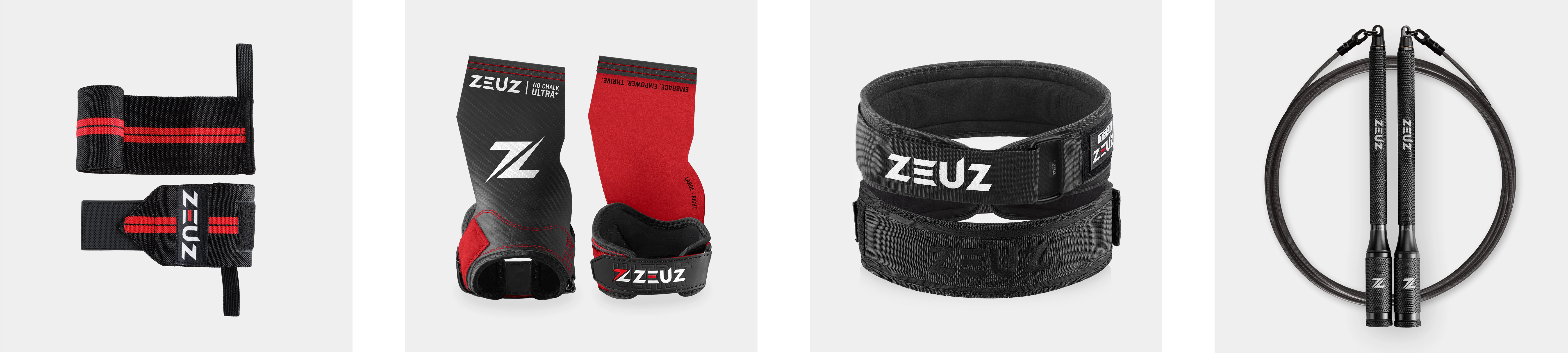
- ZEUZ Wrist Wraps: Moving toward heavy overhead movements such as thrusters, snatches and overhead squats? Wrist wraps keep your wrists stable so you can scale up with confidence.
- ZEUZ Ultra+ Fitness Grips: Going for high-volume pull-ups or toes-to-bar? These grips protect your hands and give you more grip so you can complete that volume.
- ZEUZ Weightlifting Belt - The Pro: Moving toward heavy barbell movements such as deadlifts, back squats and clean & jerks? A weightlifting belt helps keep your core stable during heavy lifts.
- ZEUZ Tornado Pro Speed Rope: Are double-unders holding you back from RX? Use the Tornado Pro Speed Rope, specially designed for speed, to unlock your double-unders.
Choose your own level
RX isn't a goal in itself. You achieve it when your body and technique are ready. Scaled isn't a step backward either; it's exactly the training you need today to be ready for it tomorrow.
Want to go RX in your next workout? Make sure you have the right equipment for it. Check out all the gear for your WODs and train with purpose at the level you're ready for right now.